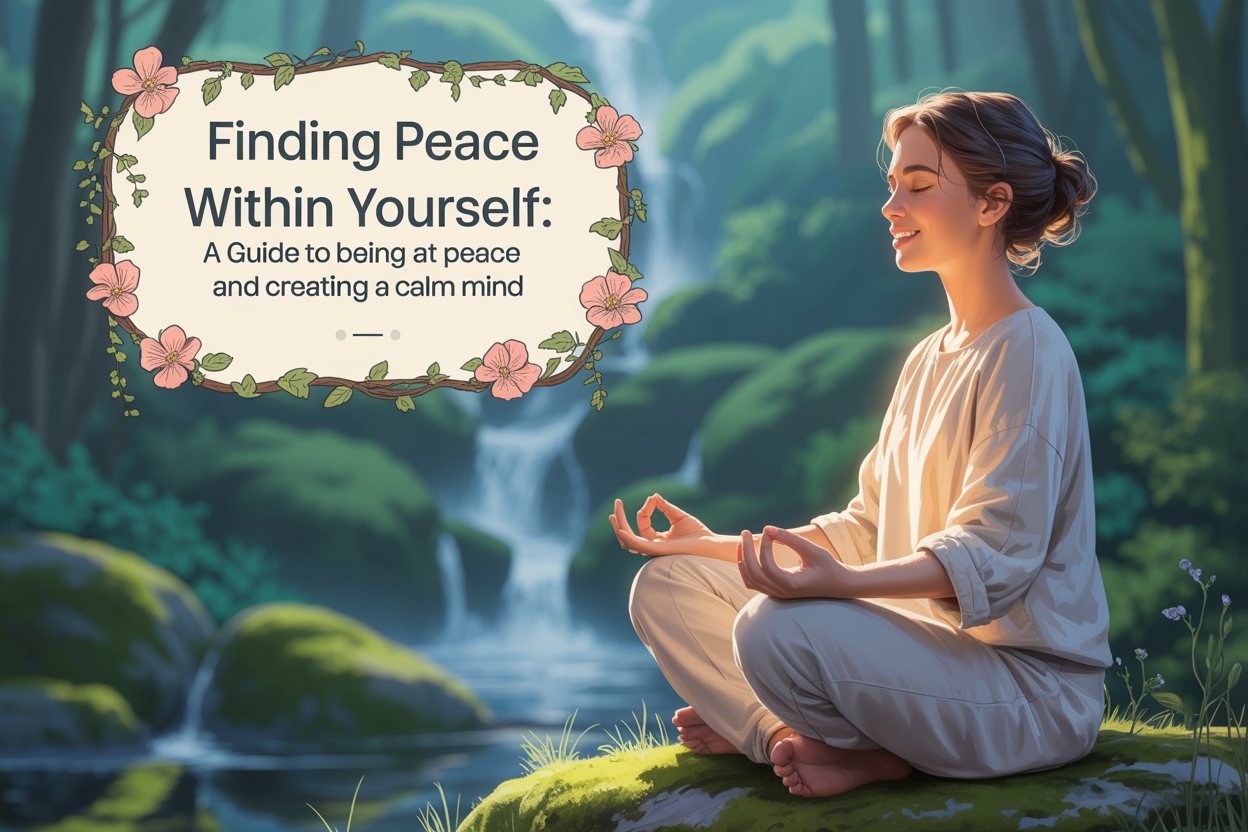

This is simple to feel overburdened, nervous, or disengaged in the hectic world of today. Finding time for ourselves is more difficult for many of us because we are always balancing obligations. This is why it’s so crucial to learn how to finding peace within yourself. It’s an essential component of leading a contented, well-rounded life, not just a luxury. Finding inner peace can completely change your life, regardless of your goals—whether they are to improve your mental health, lessen stress, or feel more joy.
We’ll go over what it means to find inner peace, the importance of mental tranquility, and doable actions you can take to begin fostering peace right now in this guide.
Finding inner peace: What Does It Mean?

We frequently envision a serene beach or a quiet room when we think of peace. True inner peace is much deeper than these peaceful moments. Accepting who you are and the difficulties life presents is the first step toward finding peace within yourself. It’s about letting go of concerns, having faith in oneself, and living in the now. You can actively work to develop inner peace; it doesn’t just happen.
The Significance of Mental Calm
Everything in your life is built on your mind. Your relationships, emotions, and health are all impacted when your thoughts are disorganized or negative. Finding inner peace, however, can have a strong, beneficial impact. The following are some of the main advantages of mental tranquility:
- Enhances Clarity and Focus: You can concentrate on what really matters and make wiser decisions when your mind is at ease.
- Reduces Stress: Over time, inner peace protects your health by enhancing your capacity to handle stress.
- Improves Relationships: You can be more compassionate and present with others when you’re at peace with yourself.
- Increases Joy: When you stop striving for happiness and begin to value what you already have, you will find true happiness.
How to Discover Inner Peace
Here are a few easy yet effective ways to start discovering inner peace. Your well-being will gradually improve if you incorporate these routines into your life.
Establish a Daily Quiet Time
Every day, set aside ten to fifteen minutes to sit quietly and without interruptions. Now is your moment to take a deep breath, pay attention to your thoughts, and just be.
Advice: To help you focus your thoughts when they stray, say something soothing like “I am at peace.”
Adopt an Accepting Attitude
We frequently suffer as a result of our resistance to the present. Acceptance enables you to recognize reality and react intelligently, but it does not imply that you agree with everything.
Practice: Say, “This is what’s happening right now,” the next time you’re feeling frustrated. How can I react amicably?
Make Your Environment Simpler
Mental chaos can result from a cluttered environment. Spend some time getting rid of things you don’t need. A more straightforward setting promotes mental tranquility.
Develop an attitude of gratitude

You can change your perspective from one of scarcity to one of abundance by concentrating on your blessings. Write down three things you are grateful for each evening. This habit will eventually give you a fresh perspective on your life.
Engage in Activities with Presence
Being totally involved in whatever you’re doing is one of the best ways to feel at peace. Breathe slowly and pay attention to your senses while you’re walking, cooking, or cleaning.
Restrict Negative Inputs
Pay attention to what you take in, whether it’s conversations, social media, or news. Limit your exposure to things that make you anxious or deplete your energy. finding peace within yourself requires safeguarding your mental space.
Think and Let Go
Every week, set aside some time to consider your feelings and thoughts. You can process your feelings and let go of any tension you’ve been holding by keeping a journal.
Finding Calm in Challenging Times
Even though life can be difficult at times, you can still practice peace. The following advice will help you maintain your composure in trying times:
Thoughts come and go, but you are not your thoughts. They don’t make you who you are.
- Breathe deeply: Taking deep breaths can help you regain control and quickly calm your nervous system.
- Seek Support: If you need someone to confide in, speak with a friend, therapist, or mentor.
- Rest When Necessary: Taking a break is not an indication of weakness. It’s critical to your general health.
Motivational Sayings to Encourage Your Path to Inner Calm

The following quotations will serve as a helpful reminder of the significance of inner peace:
“Peace originates within. Don’t look for it without — Buddha
“You are the only one who can bring you peace.” Ralph Waldo Emerson
“You will tilt your head back and laugh at the sky when you realize how perfect everything is.” Buddha
As you proceed on your quest for inner peace, bear these quotations in mind.
Concluding Remarks on Developing Inner Peace
It takes a lifetime to find inner peace. You can get closer to the peaceful, resilient, and joyful life you want with each little step you take, whether it’s sitting in silence for a few minutes every day or practicing gratitude.
Never forget that you are worthy of mental tranquility. Begin today by embracing the peaceful moments in your life. You are building a better, more fulfilling life with each decision you make to achieve inner peace.
You Are Not Alone
If you or someone you know is struggling with suicidal thoughts, please reach out for help. Here are confidential resources you can contact anytime:
- India: Befrienders India
- USA: 988 Suicide & Crisis Lifeline
- UK: National Suicide Prevention Helpline
- India: Befrienders India – Call +91-22-27546669
- USA: 988 Suicide & Crisis Lifeline – Call or text 988
- UK: National Suicide Prevention Helpline – Call 0800 689 5652You are not alone. Help is available.
Leave a Reply